

If you’ve spent any amount of time shopping on second-hand sites for fetish clothing, you’ll have found the term “PVC latex” being thrown around a lot. Which is absurd, because they’re completely different things. But for most people, anything shiny is automatically “latex”. So let’s explain the difference, and the pros/cons of each.
Table of Contents
Latex: It Grows on Trees. Really Expensive Trees.

Latex maid dress, tied down to the YingYu bondage frame
Latex, also known as rubber, is a natural product derived from the sap of rubber trees. It’s flexible, durable, and biodegradable. It has a distinctive rubbery smell. To complicate matters, there’s also a type of synthetic rubber made from petrochemicals, but it’s generally not used for clothing. Since we’re talking about clothing here, we’ll forget about that one.
It’s not just the shine that appeals to many people—Latex is very stretchy, and can often feel like having a second layer of skin (hence the famous brand, Skin Two)—making it a frequent object of fetishization. Latex clothing is made to highlight your curves, and will often be form fitting. It’s more expensive than PVC because of the more laborious and manual extraction of the latex from the tree.
I bought some latex clothing, so why isn’t it shiny?! In its natural form, latex isn’t actually shiny; it’s quite dull. This isn’t a defective piece of clothing, that’s just how it is. It might even have come from the factory lightly dusted in starch powder or talc.

A latex catsuit, prior to being shined
To get that shiny latex, you need to polish it, with a special type of silicone oil. You should do this anyway, as it maintains the suppleness and durability of the material. As a natural product, it needs care and attention. You should also keep it out of the light when in storage; UV from the sun will degrade the colors, turning white into yellow, and over time break down the structure of the garment. It can be easier to rip, as well; be careful around sharp objects.

A light rub down in silicone oil brings out the classic shine—and protects the latex
Another downside of latex is that putting it on isn’t easy, especially if you’re already a bit hot and sweaty. You’ll find it naturally clings to your skin, and even worse—body hair. You have a few options here:
- Talc (Talcum powder) is the most commonly used and cheapest. Powder reduces the friction by taking away the sweatiness that causes the clinging.
- Dressing aid is a silicone lubricant, which you spray on the inside of your garment so you can effortlessly glide into it. It’s a pricey option, but many people enjoy the long-lasting feel of the latex gliding over their body every time they move.
- Chlorination is a chemical process that permanently alters the very structure of the latex, using chlorine particles to fill in the tiny holes of the material that cause it to be clingy. It also reduces the stretchiness slightly, and makes it a little harder to keep shiny because the silicone oil finds it harder to soak in (because you’ve plugged the holes!) Chlorinated clothing is available as an added service at many manufacturers, and while it can be done at home (I’ve done it often to all my clothing), I don’t recommend it as you need to produce chlorine gas, which will kill you if mishandled—or give you permanent lung damage.
Despite all those downsides, nothing compares to the feeling of latex pressing up against your skin; the twang of a latex-encased buttcheek being smacked; or the enticing smell of rubber. It’s no wonder that latex is a fetish for many.
PVC: Cheap and Shiny

A PVC raincoat (also featuring the Captain’s Hook dildo from Hankey’s Toys)
PVC, or polyvinyl chloride, is a type of plastic made from petrochemicals. It’s also known as simply vinyl, enamel, patent leather, or patent vinyl. It can also be referred to as PU leather (polyurethane), though technically, that’s a different product. PVC has many different names, and while they’re all the same thing, they’re sometimes used for different applications. On boots or trousers, you’ll often see patent leather, implying a thicker fabric. It tends to be called PVC or vinyl on looser garments and above the waist.

Bitsyie “enamel” swimsuit, also featuring Ram, the dual-density fantasy monster dildo.
PVC is shiny from the moment it’s made, though some fabrics are shinier than others: red and black is usually the shiniest, though I don’t have the slightest idea why.
When shopping for PVC clothing, there are two main types of PVC fabric you’ll want to choose between. The most common is backed with polyester or some other material, so it’s shiny on the outside, with something else on the other side. The thickness of this combined material determines the quality. This type of PVC clothing is more socially acceptable and will often be worn out and about when clubbing. Lots of high street stores will stock all kinds of garment made from fabric-backed PVC; it’s easy to make into trousers, puffer jackets, and shirts.


The second type of PVC is pure plastic with no backing material, and falls firmly into the more fetishistic. British manufacturers PVC-U-Like are one of the few left producing this kind of fetish clothing; Fetish Queen is a cheaper alternative from China.
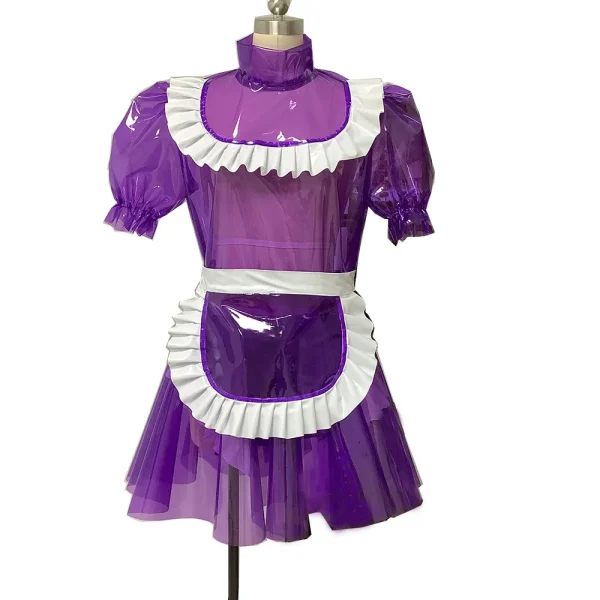
There are various qualities of PVC fabric; the cheapest, thinnest, will often break apart at the seams after a year or less of being worn and stretched. Thicker PVC can last a decade or more; my straitjacket from Misfitz Alternative Wear is still going strong a few years after buying it, despite my best efforts to wriggle out of it. Like latex, PVC will degrade when stored in sunlight.
Are there any health risks? Not in clothing. If we were talking about PVC dildos, to be inserted inside your body, they’re not safe. They may not be toxic like they used to be (I’m not ashamed to admit in my less informed years I had a nasty allergic reaction when I tried sucking on one!), but PVC dildos can never be really cleaned and will end up hiding bacteria in micropores. Clothing doesn’t go inside your body, though, and there’s no compelling evidence I can find that it’s dangerous in any other way. Given how much PVC clothing is out there—and my own lifetime of experience with it—you’d expect something solid to have turned up by now. Whether there are health risks once it’s been disposed into the natural environment is another matter entirely; microplastics are everywhere now.
PVC vs Latex: Which is Best?
Real latex is too much effort for most people; the care, the dressing aid, the need to shine it—and the oily residue it then leaves on everything you touch. It’s just too much, and I say that as someone who loves latex and has a lot of it. There’s no better feeling than slipping into a latex catsuit or sleep bag; the smell alone is enough to turn me on. But it’s not for everyone.
Most people will be better served by PVC, despite the poor eco-credentials and fake health scares. It’s cheap, can be worn just like regular clothing, and doesn’t need care beyond a little soap and water to clean it.